
Build an Oconee County Former-Owner Timeline
Begin with the most recent recorded grantee. Then step back one conveyance at a time until the deed records run out. Treat any timeline as a worksheet pattern, never a claim about a specific parcel, and fill each row only from the deed image, its index entry, and a matching legal description.
| Recorded stage | Earlier to later party | Instrument | Continuity check |
|---|---|---|---|
| Newest transfer | Grantor to current grantee | Copy exact deed type | Book/page and legal description |
| Previous transfer | Earlier grantor to that grantor | Copy exact deed type | Acreage or lot/block |
| Earlier link | Repeat with newly found grantor | Note estate or court capacity | Plat, road, calls, adjoining land |
| Pre-online link | Names found in deed books | Read the full instrument | Clerk, microfilm, or archives citation |
A shared name proves nothing. Continuity comes from confirming the same lot, parcel, acreage, road, subdivision, or metes-and-bounds calls in every deed. Quitclaim and warranty instruments carry different deed records language, but neither label alone shows the chain of title is complete.
Handle Oconee County's Online Date Clues
Date clues online deserve a careful read. The GSCCCA name interface lists an Oconee County index start of January 1, 1990. The statewide landing page states all counties are covered from January 1, 1999. Historical data from 1993 through 1998 is being added. Neither statement settles the exact image cutover for every Oconee instrument. So verify the earliest property records you need.
Online depth is not deed-book depth. Confirm older Oconee County coverage with the Clerk when an index date, missing link, or image matters.
Online deed records can start the former-owner chain. Older or missing links belong in the Clerk's vault, local microfilm, or cataloged archival holdings.
Walk the Oconee County Deed Chain Backward
The GSCCCA screen lets you filter by party type, instrument type, county, neighboring-county inclusion, name, and date range. Search exact spellings and reasonable variants. Narrow the dates as the chain tightens, and note rejected candidates along with accepted ones.
- Pull the latest deed and note grantee, grantor, date, book/page, and legal description.
- Search that grantor as an earlier grantee in the GSCCCA index.
- Compare tract wording before accepting the link, then repeat.
- Follow plat, estate, court, and corrective references when the sequence breaks.
- Move to the Clerk, Ivy Room, Georgia Archives, or FamilySearch when online coverage ends.
- Grantor
- The party transferring the stated interest.
- Grantee
- The party receiving that interest.
- Chain of title
- The connected sequence of instruments affecting the tract.
- Reverse index
- An index used to trace a party's role backward.
- Legal description
- The tract wording that outlasts many street-label changes.
Keep the Oconee County Tract Identical
Hold the land itself constant. Track acreage, lot and block, subdivision, plat, road labels, adjoining owners, and legal calls through every deed. An old instrument may predate today's parcel number entirely. A 2014 postal realignment also shifted some deliveries between Watkinsville 30677 and Bogart 30622, so keep historic address wording beside any normalized form. Splits and recombinations can create child tracts that no longer share one modern parcel key. Carry both parent and child descriptions until the new plat and its deeds explain the change.
Test Oconee County Prior Owners Against Plats
A plat can solve a mystery. It may explain a split, a new lot number, or an access clause the deed only hints at. The Bishop and Saint Aelred file shows the risk plainly: a 2023 plat was deemed unapproved, while a corrected administrative plat was recorded in Plat Book 2025, page 35, carrying a Cemetery Road non-access easement. Pull the recorded image through the GSCCCA Plat Index or the Clerk's copy service. Keep the latest valid plat beside the deed chain. That pairing is what makes a prior-owner conclusion trustworthy.
Extend Oconee County Previous Owners at the Ivy Room
The Oconee County Library Ivy Room extends the paper trail. Its holdings include deed and mortgage microfilm, Superior Court Minutes from 1875 through 1898, Homestead Records from 1876 through 1912, and long newspaper runs. A homestead declaration can supply a household name, a residence, and a property description. Those details often unlock the next deed. Old indexes can be hard to read.
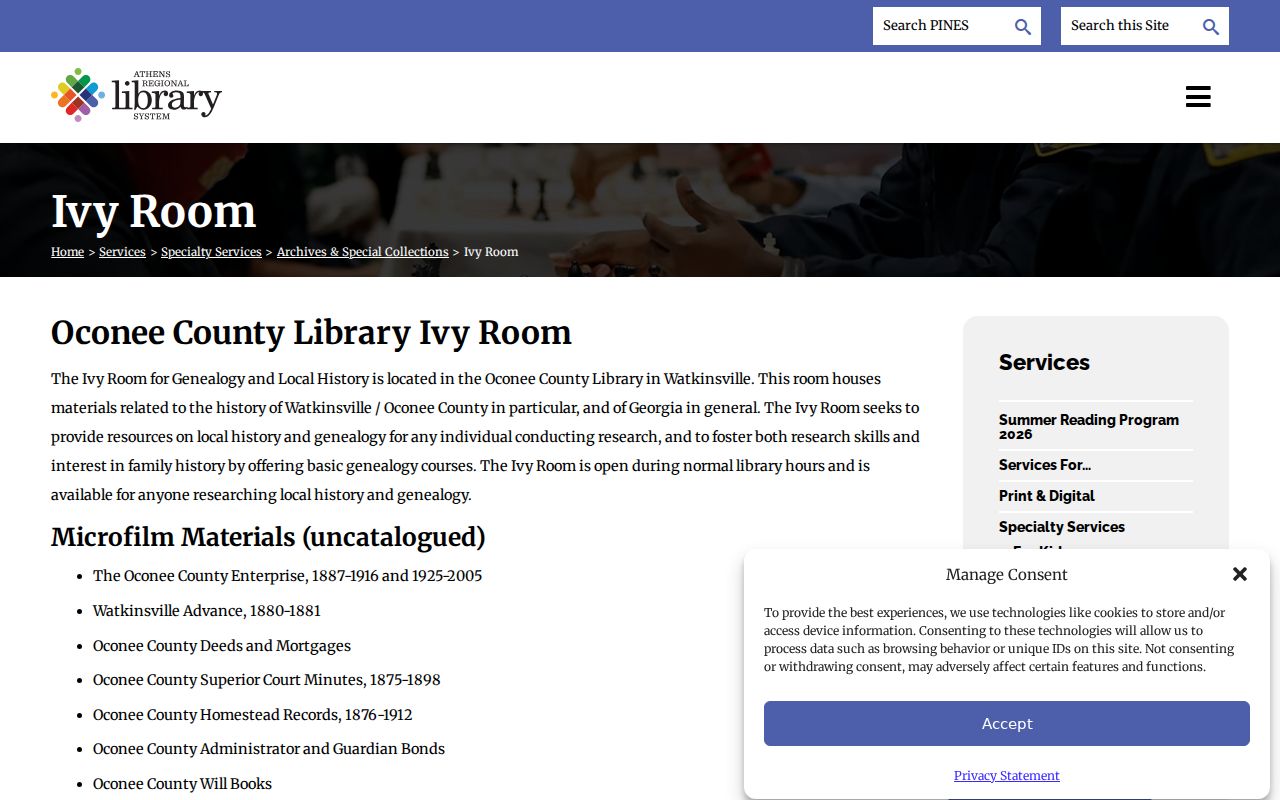
Microfilm usually means page-by-page browsing. Pair every clue with the deed book or court source it names, and never treat a newspaper notice as the conveyance itself.
Browse Oconee County Records Beyond Name Search
Georgia Archives notes that FamilySearch county land, probate, and court images may require a free account. Many collections are browseable rather than name searchable. Use the Catalog, pick the location, and apply a subject such as Land and Property to find county microfilm cards identifying surviving runs.
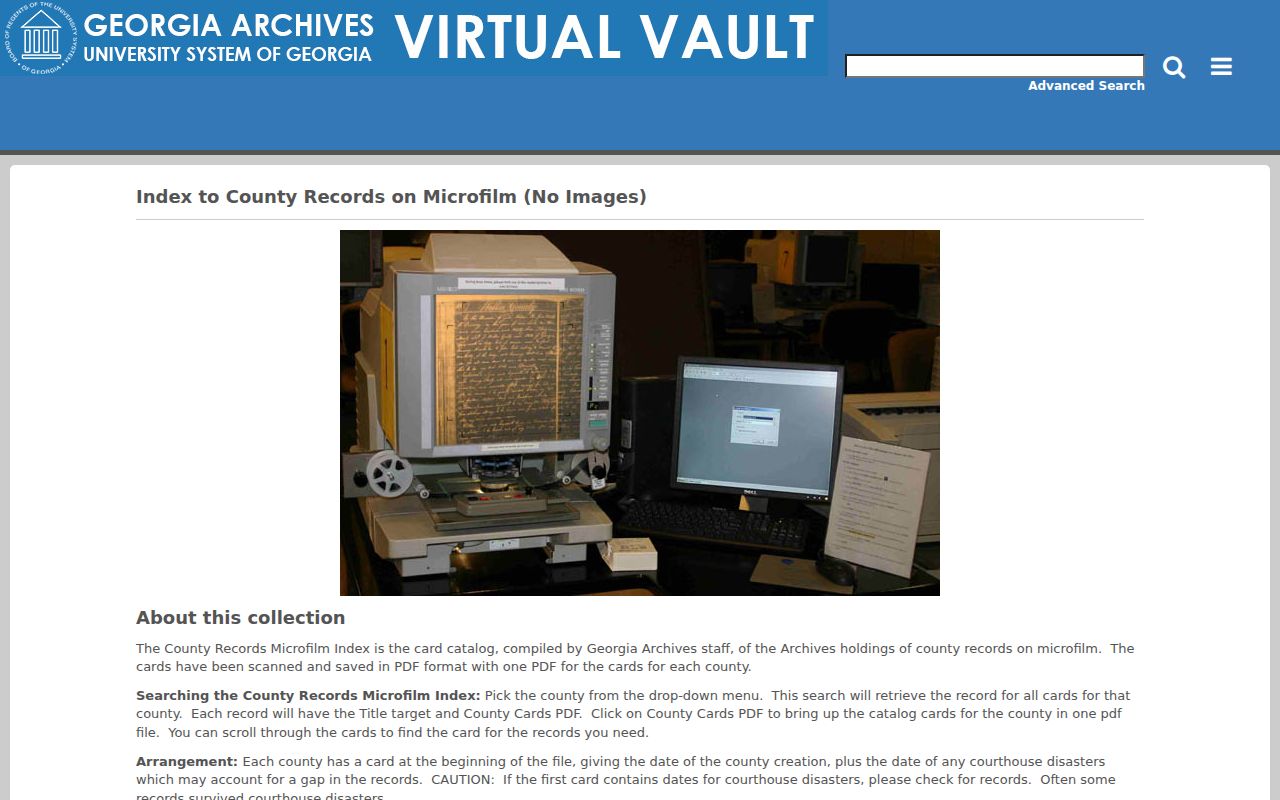
A disaster note never means every record vanished. Surviving volumes, Clerk holdings, and sources from predecessor jurisdictions often fill the gaps.
Cross Oconee County's 1875 Boundary in Time
Oconee County dates only to 1875. Before that, Watkinsville's history sits inside Clarke County record geography, so a chain reaching past county formation may demand Clarke County or state archival material. Never assume the tract first appeared in an Oconee deed book. Estates complicate things too. Executor deeds, quiet-title cases, partitions, homestead filings, and lis pendens can all break a neat sales pattern. When fiduciary capacity or a court order surfaces, search Probate or Superior Court records next.
State the Limits of Oconee County Former-Owner Research
A worksheet is not a title opinion. It cannot prove marketable title, cleared liens, valid signatures, legal access, or surveyed boundaries, and it may miss an unindexed instrument, a spelling variant, an estate interest, a release, or a court order. The real task is reconstructing the recorded sequence of deed records and documenting every uncertainty honestly.
Not a title opinion. Use certified Oconee County records and qualified title or legal help for a formal ownership conclusion.
Former-owner research serves house history, estate work, and property diligence. It must never be used to stalk, harass, threaten, or harm a living person.
Close the worksheet with a source log. For every accepted link, record the party spelling and the role. Also record the instrument type, recording date, book and page, and tract language. Add the plat reference and where the image or copy came from. Mark an inferred connection as an inference until a document confirms it. Two people can share a name. Compare spouses, legal capacities, adjoining owners, and the land description. Do not pick the convenient answer. A certified copy from the Oconee County Clerk always outweighs a transcription. It beats any search screen. If an earlier conveyance stays missing, leave a dated gap in the chain. Then list the Clerk volume, archive catalog, court file, or probate series. That series still needs review.