
Inspect the Oconee County Current Owner Card
Start with the Oconee County Property Appraisal card. That record opens with the ownership line. It pairs the situs address with a mailing address where the office has one, plus the map or parcel code and the legal description. Land and building values, total fair-market value, assessed value, exemptions, and tax district complete the card. No single field does the work alone.
| Ownership line | The person, trust, estate, or company carried on the current tax-roll snapshot |
|---|---|
| Mailing address | The destination for notices, which may differ from the parcel location |
| Situs address | The location assigned to the Oconee County parcel |
| Parcel code | The key used to compare QPublic, GIS, tax, and planning records |
| Legal description | The short tract clue to match against the newest deed or plat |
| Assessment context | Values, exemptions, and district fields that help confirm the right parcel |
A current owner line is not an occupancy record. People receive property notices at mailing addresses where they do not live. Keep the parcel number and access date with anything you save.
Check the Oconee County Owner-of-Record Snapshot
Open the official Oconee QPublic portal and search by situs address or exact parcel code. Copy the owner line. Save the mailing address, legal description, and any sale or assessment history the card displays. Do not count on a last-sale field. Do not expect a refresh timestamp.
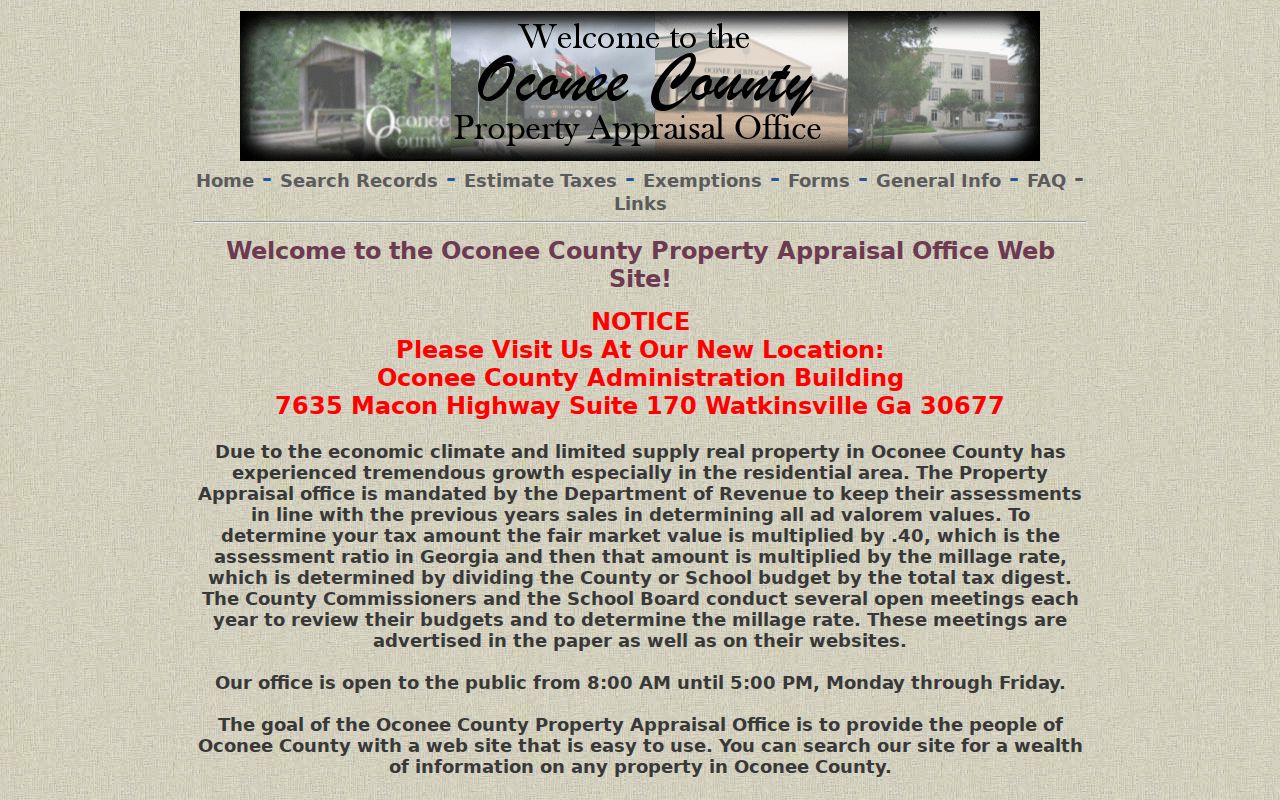
The official landing page still confirms the right source. When anti-bot protection blocks the card, call Property Appraisal at 706-769-3921 or use the counter at 7635 Macon Highway.
Compare Oconee County's Two Ownership Clocks
Oconee County keeps two ownership clocks. The Clerk and GSCCCA run the recording and indexing clock. Property Appraisal runs the tax-roll clock. The appraisal office physically reviews property at least once every three years and updates for sales, permits, conservation-use filings, appeals, and construction, but it promises no same-day deed updates. The grantee may appear in the deed index first. Record all three dates: deed, recording, and card access. If the names differ, call both offices.
Note: Different owner names often reflect update timing, but only the custodians can explain the specific record.
Confirm the Oconee County Current Owner by Deed
The strongest answer matches two records. Compare the latest recorded deed with the current parcel card for the same tract. Search the GSCCCA index with exact names and a narrow date range. Compare deed reference and legal description. The deed proves the transfer. The parcel roll shows how the appraisal office carries it today.
- Copy the exact owner line, parcel code, situs, and legal description from QPublic.
- Search the GSCCCA Real Estate index for the newest matching grantee and Oconee instrument.
- Compare book and page, recording date, party capacity, and tract description.
- Ask the Clerk or Property Appraisal to resolve a mismatch; order an eCertified record when authenticated proof is needed.
- Owner of record
- The party named on the official roll at the roll's current update point.
- Vesting
- The way the recorded instrument states that an interest is held.
- Registered agent
- The designated recipient for an entity's legal notices, not necessarily its owner.
Verify Oconee County Entity and Estate Names
Copy entity names exactly as recorded. Keep suffixes, trust wording, executor capacity, and life-estate language intact. For an LLC, the Georgia Secretary of State eCorp search confirms the filed business name, control number, status, and registered-agent details. Those filings rarely show every beneficial owner. Never let them replace the deed's grantee wording.
Estate or executor names point toward Oconee Probate Court. A court order, executor's deed, survivorship provision, or later corrective instrument may explain why one abbreviated index entry looks unclear. Get the actual record before concluding anything.
Check Oconee County Parcel Edit Context
The Parcel Fabric Tax Parcels layer hides useful detail. It exposes RealKey, calculated acreage, edit date and user, comments, and created or retired record references. That metadata flags a split or recombination. It cannot date the owner line. Use the GIS map to confirm that the parcel code and its geometry still correspond to the tract named in the deed. Preserve codes like A 10 011 exactly. A GIS edit date, a tax-bill date, and a recording date are three separate timestamps with three separate meanings.
Protect an Oconee County Current Owner From Filing Fraud
Georgia's FANS is the Filing Activity Notification System. It can alert a subscriber when participating clerk index data matches registered names. The Georgia Attorney General's guidance pairs those alerts with 2025 deed-filing identity safeguards. Alerts are a warning tool, not a fraud guarantee.
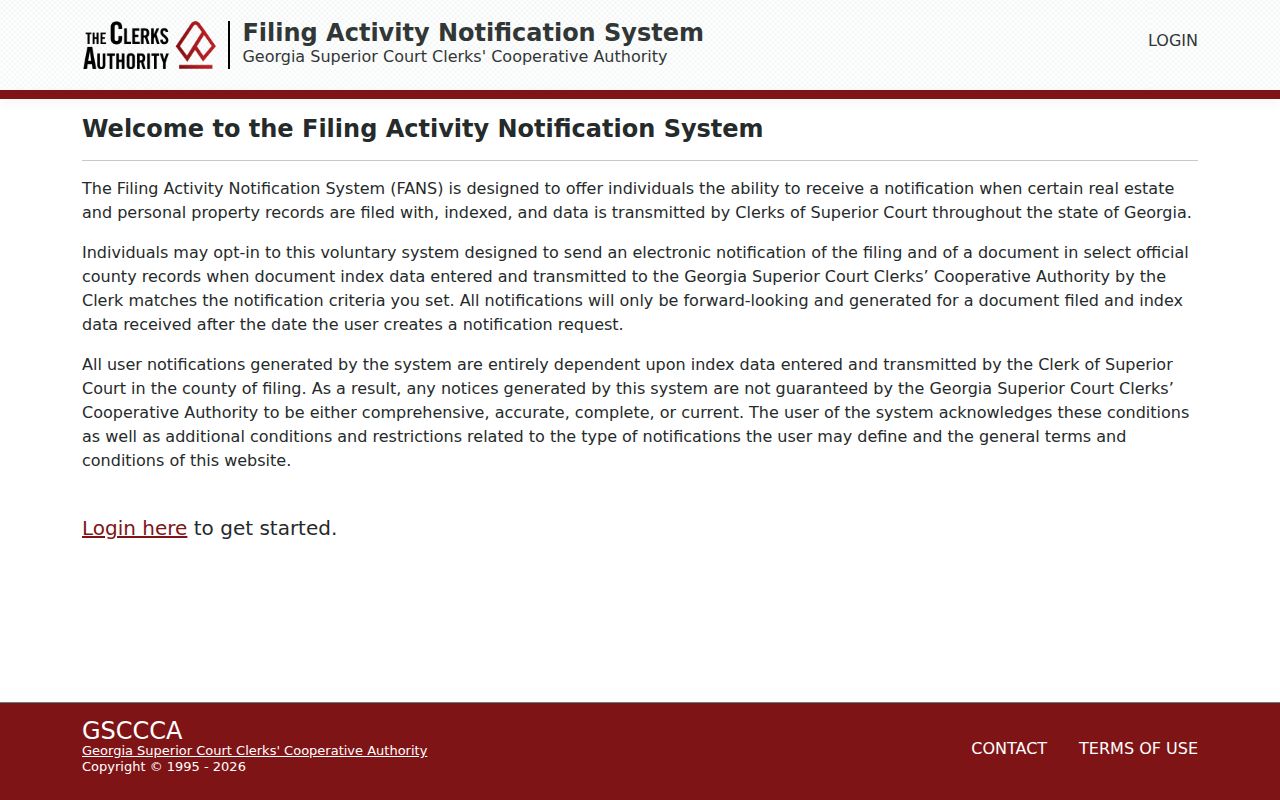
Register every relevant name form. Investigate any alert through the Clerk, and review the actual recorded instrument before deciding a filing affects the parcel.
Resolve an Unclear Oconee County Current Owner
Call Property Appraisal if QPublic is blocked or conflicts with a recent deed. Weekday office hours apply. The Clerk of Superior Court holds the recorded instrument. That office sits at 23 North Main Street, Room 208, Watkinsville. eCertification is available too. The county publishes no current fee for it.
An Open Records Act request can reach public fields or documents that are not posted. Describe the parcel and the record. Georgia law generally requires production or a written response. That response must cover status, cost, exemption, and timeline within three business days.
Use Oconee County Current Owner Data Lawfully
The tax-roll mailing address exists for official notices. It may support a legitimate property inquiry. It does not prove that anyone lives there, and it does not permit persistent contact. Georgia Safe at Home, VoteSafe, and eligible appraisal non-disclosure protections can lawfully restrict an address, so respect any redaction rather than working around it.
Owner of record is not occupant. Use Oconee County current owner data only for lawful property research, and never to stalk, harass, threaten, or harm.
Owner of record data from the Oconee County tax roll shows who the assessor lists today. That label carries no promise of marketable title, cleared liens, accurate boundaries, or legal access rights. When a property's legal status matters rather than the roll snapshot, order a certified deed from the recorder and hire a title professional.